

Stable access to fertiliser is currently a matter of key importance to Australia’s agricultural sector and its food production and security.
Several major shocks to Australia’s fertiliser supply have occurred in recent years, including the COVID-19 pandemic, Russia’s invasion of Ukraine, and the closure of the Strait of Hormuz. It is clear that increasing the resilience of Australia’s fertiliser supply is strongly in the national interest and provides local commercial opportunities. While resilience can be increased by expanding Australia’s onshore capabilities using traditional technologies, looking longer term, new technologies in fertilisers offer the potential for increased resilience in fertiliser supply as well as reduced environmental impact: a “win-win” going forward.
Important challenges such as these can lead to new solutions. And new technological solutions are best protected under the patent system.
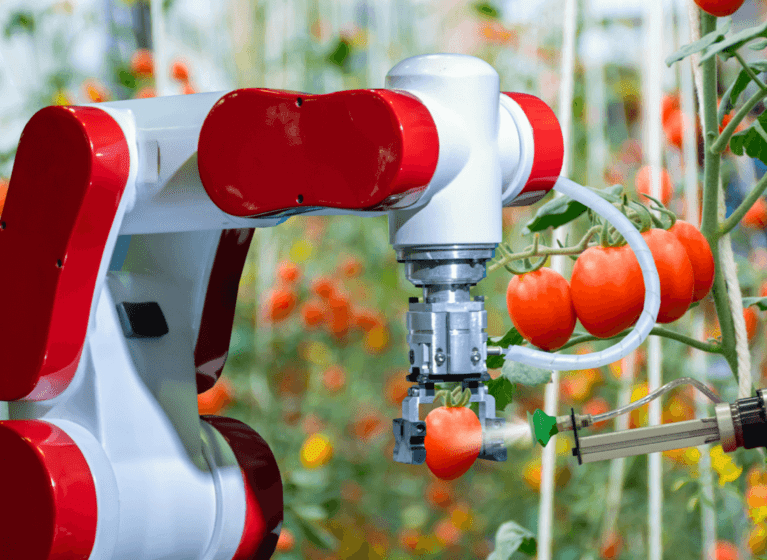
New technologies in fertilisers are diverse: with production innovation being driven by decarbonisation; formulation innovation being driven by nutrient-use efficiency and biological function; and application innovation being driven by sensing, automation and AI. The focus of this article will be production innovation, with an article discussing formulation innovation to follow shortly. Major aspects of application innovation include image processing, digital twins, artificial intelligence (AI), internet of things (IoT) networked sensors and systems, as well as use of drones, robots and their control systems.
Traditional urea production
About 60 per cent of Australia’s urea supply comes from the Persian Gulf. Urea is the main ingredient used in most fertilisers in Australia.
Traditional urea production is energy intensive: generating hydrogen from natural gas, reacting that hydrogen with nitrogen in the Haber-Bosch process to form ammonia, before reacting that ammonia with carbon dioxide and dehydrating the resultant intermediate to provide urea. These steps are conducted under high temperature and pressure. The traditional process relies heavily on fossil fuels for both energy and raw materials. For these reasons, the Gulf States are major production centres.
Australia is currently entirely reliant on other countries for its urea supply. Incitec Pivot’s Gibson Island urea manufacturing facility near Brisbane closed in 2023, citing the cost of natural gas in the local market as the reason for closure. Perdaman Industries plans to open a new urea manufacturing facility in Karratha in Western Australia in 2027. This will provide Australia with onshore urea production. However, the Perdaman facility is expected to rely on established production technologies and thus ready access to large amounts of natural gas. This is an imperfect solution both environmentally and logistically.
Fertiliser production innovation
Decarbonising ammonia production offers advantages to many fields, including fertiliser production. There are many strategies being developed and patented to lower the carbon impact of fertiliser production. These are categorised below. Use of a combination of these strategies can offer synergistic benefits.
Lowering the reliance on fossil fuel feedstock
Green ammonia typically uses hydrogen made by water electrolysis rather than from natural gas, coupled with Haber-Bosch ammonia synthesis. Costs are decreasing but it is currently much more expensive than traditional (grey) hydrocarbon-based ammonia production.
Decreasing release of polluting by-products
Blue ammonia refers to the generation of ammonia while using technology for carbon capture and storage of the carbon dioxide formed during the hydrogen production process. It is marketed as a transition technology, with green ammonia offering greater environmental benefits than blue ammonia.
Reducing carbon emissions from the energy required in production
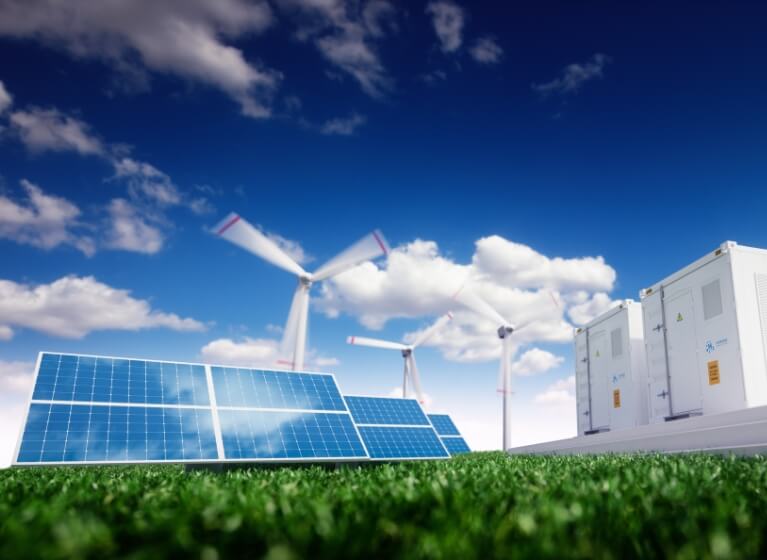
Use of renewable energy during fertiliser production offers environmental benefits, particularly during energy intensive processes such as ammonia formation. Similarly, use of other technologies can provide energy savings: these include improved catalyst systems and smarter, more dynamic process control.
Decentralised production
Use of decentralised, modular systems for ammonia production allows fertiliser (or important feedstock such as ammonia) to be produced close to the site of use. This reduces the energy cost of transport and provides great benefits in resilience by removing reliance on operation of a single large production facility. Decentralised systems that do not rely on fossil fuels for feedstock and/or energy are particularly attractive in terms of logistical resilience.
Nutrient recovery and recycling
Fertiliser run-off and metabolites are a major environmental issue in many waterways. Technologies are emerging to recover these materials, thus cleaning the waterway. If the recovered products meet agronomic and contaminant specifications, they can also potentially be re-used as fertiliser.
Final thoughts
Repeated disruptions to Australia’s fertiliser supply have demonstrated that a new approach is needed. Although resumption of onshore urea production in the near term is welcome, beyond that there remains great potential for innovation to increase supply chain resilience and reduce environmental impact. The advancements that improve the cost effectiveness of green ammonia production are likely to be highly valuable and can be combined with other strategies to maximise the process. Such technological innovation is best protected by the patent system.
Here at FPA Patent Attorneys, we have deep knowledge and experience in Agribusiness and Clean technology. We focus on local clients, with the client’s commercial needs and considerations driving the strategy we develop in partnership with them. If you are interested in advice in this space, please get in touch.