


This article explains why Australian patent law does not recognise “selection patents” as a distinct doctrinal category, and why it does not need to. Using the recent interlocutory decision in AstraZeneca AB v Pharmacor Pty Ltd as a practical example, the article shows how Australian courts assess downstream or species‑level inventions through orthodox principles of novelty and inventive step, rather than imported selection‑patent criteria. It highlights the patentee‑friendly distinction between mere theoretical coverage and enabling disclosure for novelty, and the focus on whether the skilled person would have been led to the claimed invention as a matter of routine for inventive step. The article also contrasts this judicial approach with aspects of patent office examination practice, offering practical guidance for foreign practitioners and patentees seeking protection for selection‑type inventions in Australia.
Foreign practitioners, particularly those trained under UK or EPC practice, often ask whether Australian patent law recognises “selection patents”. The short answer remains no. Current Australian courts do not treat selection patents as a distinct doctrinal category.
That is not because Australian law is hostile to downstream or “species” level inventions. Rather, it is because Australian patent law has never needed a separate selection patent doctrine. Australian law does not ask whether a claimed species qualifies as a “selection” over a known class. It asks only whether that species is disclosed, and whether the prior art would have led the skilled person to it as a matter of routine with an expectation that it might produce a useful result.
This is discussed in the Federal Court decision of AstraZeneca AB v Pharmacor Pty Ltd (February 2026). As an interlocutory decision, the Court’s comments are necessarily made in the context of preliminary relief. Nonetheless, they are of real practical interest to patentees and practitioners.
The issue in AstraZeneca v Pharmacor
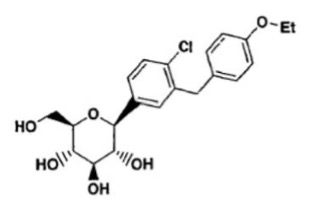
The present issue concerns the proposed launch of a generic dapagliflozin product in Australia. AstraZeneca alleges that Pharmacor’s intended product would infringe AstraZeneca’s Australian patent narrowly directed to the compound dapagliflozin. The compound claimed in claims 1 and 2 is:
Pharmacor, in turn, contends that the asserted claims are invalid in light of an earlier patent application that discloses broad and narrower Markush structures which encompass, but does not expressly identify, dapagliflozin. The relevant Markush structures include:
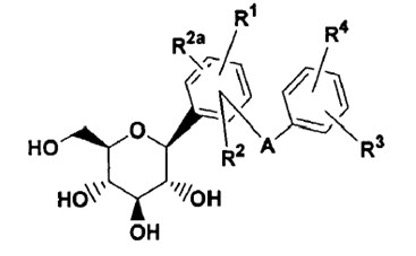
and
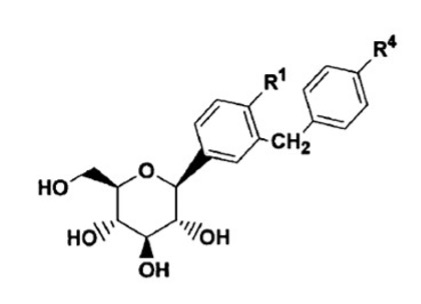
In advancing their invalidity challenge, Pharmacor relies on what it characterises as principles relevant to “selection patents” in support of its invalidity arguments in relation to novelty and inventive step.
As discussed below and summarised in this AstraZeneca v Pharmacor interlocutory decision, Australian courts have not been persuaded that such principles form part of Australian law, having regard to the orthodox and well‑established tests for novelty and inventive step.
Novelty: Disclosure, not theoretical coverage
Under Australian law, novelty turns on whether the prior art provides clear and unmistakable directions to do what is later claimed, in other words whether following the disclosure would inevitably result in infringement of the relevant claim.
In practice, this means that a broad disclosure, such as a Markush formula, a sequence listing, or a large library of variants, does not anticipate a later “selection” merely because the species falls within its scope. Logical inclusion or theoretical availability is not enough. The prior art must teach the invention itself to the skilled reader, by identifying the claimed subject matter as something to be made or used.
Australian courts therefore draw a sharp and patentee favourable distinction between disclosures that merely encompass an invention and disclosures that actually convey it to the public. Long lists of alternatives, without guidance as to which matter or why, are routinely treated as “paper disclosures” rather than an anticipating (“enabling”) disclosure.
Anticipation requires more than the bare appearance of a compound, sequence, or embodiment. The prior art must present the invention to the skilled person as relevant, rather than leaving it buried among undifferentiated possibilities.
Accordingly, the orthodox approach to novelty is already well suited to assessing the validity of selection‑type inventions. Australian courts therefore have no need to apply, and do not apply, any separate or special selection‑patent analysis.
Inventive step: Being led, not choosing with hindsight
Inventive step is assessed by asking whether the skilled person would have been directly led, as a matter of course, to try the claimed invention in the expectation that it might well produce a useful result.
As AstraZeneca v Pharmacor affirms, Australian law does not impose a freestanding requirement that a claimed species demonstrate a technical advance, special advantage, or non-arbitrary selection over a broader disclosure, and across the full breadth of the claimed selection. Nor does it require the patentee to articulate the inventive step in the specification. UK style technical advance tests simply do not form part of Australian law.
In large design spaces, common in chemistry and biotechnology, the presence of many plausible alternatives is often relevant because it may indicate that the prior art did not point the skilled person to the claimed choice. That factual context can support inventiveness. However, it is not decisive.
Australian courts have not adopted anything akin to US style structural non obviousness. While identifying a compound from a laundry list of alternatives, or from within a Markush structure, is often a sensible starting point for a selection type invention, the invention may still be obvious if the prior art would have led the skilled person to the claimed invention as part of routine research or development work.
Experimental data can still be highly valuable to reduce the risk of obviousness attacks and to anchor why the claimed choice was not routine, even though it is not a separate legal requirement.
Again, orthodox Australian inventive‑step analysis is sufficient to deal with selection‑type inventions, and Australian courts have consistently resisted importing foreign “selection patent” requirements that do not form part of the core inventive‑step inquiry.
Examination practice and the Australian Examiners’ Manual
Despite the existing authorities raising significant doubts that the concept of selection patents forms part of the law in Australia, the current Australian patent office Examiners Manual continues to explicitly refer to “selection patents” as a separate category of invention, and sets out criteria derived from older UK authorities. This includes requirements that a selection be based on a substantial advantage, that the advantage be common across the selected group, and that the specification describe that advantage.
While those principles reflect a historical line of authority, they sit uneasily with the way Australian courts are approaching novelty and inventive step for selection-type inventions.
In practice, this can lead to a disconnect between examination objections framed in terms of “selection criteria” and the orthodox legal tests currently being applied by the courts. That disconnect is particularly apparent where examiners focus on the absence of a stated advantage, even though Australian courts have consistently confirmed that an advantage is not required to establish inventive step.
While the Examiners’ Manual reflects examination practice before the Australian patent office, it is not a substitute for the statutory tests as applied by the courts.
What this means in practice
For foreign practitioners, the approach taken by Australian courts reinforces that Australian patentability should be analysed on its own terms, rather than through the lens of a selection‑patent doctrine.
Australia does not reject downstream or “species” level inventions. Nor does it require patentees to defend them as “selections”, or to clear additional hurdles framed in terms of advantage, arbitrariness, or special technical effect. Instead, Australian law applies stable and familiar principles that, when properly understood, are comparatively accessible to applicants and patentees.
In short, Australia draws a clear and patentee friendly line:
- Anticipation requires a disclosure that teaches the invention, not mere inclusion within a broad class.
- Inventive step turns on whether the skilled person would have been led to the invention as a matter of routine with an expectation that the approach might well produce a useful result, not on whether it can be characterised as a technical advance or special advantage.
Final remarks
The AstraZeneca v Pharmacor interlocutory decision does not introduce new law. What it does, usefully for cross border practice, is reaffirm that Australia remains doctrinally orthodox, predictable, and resistant to importing foreign selection patent concepts that are unnecessary in its statutory framework. Further guidance may emerge if the proceeding continues to trial, which is expected to commence mid-2026.
Overall, Australia remains a patentee‑friendly jurisdiction for protecting so‑called “selection inventions”, precisely because to date the courts have consistently avoided treating them as a special case.